
Blooms Taxonomy Printable SkillSheets
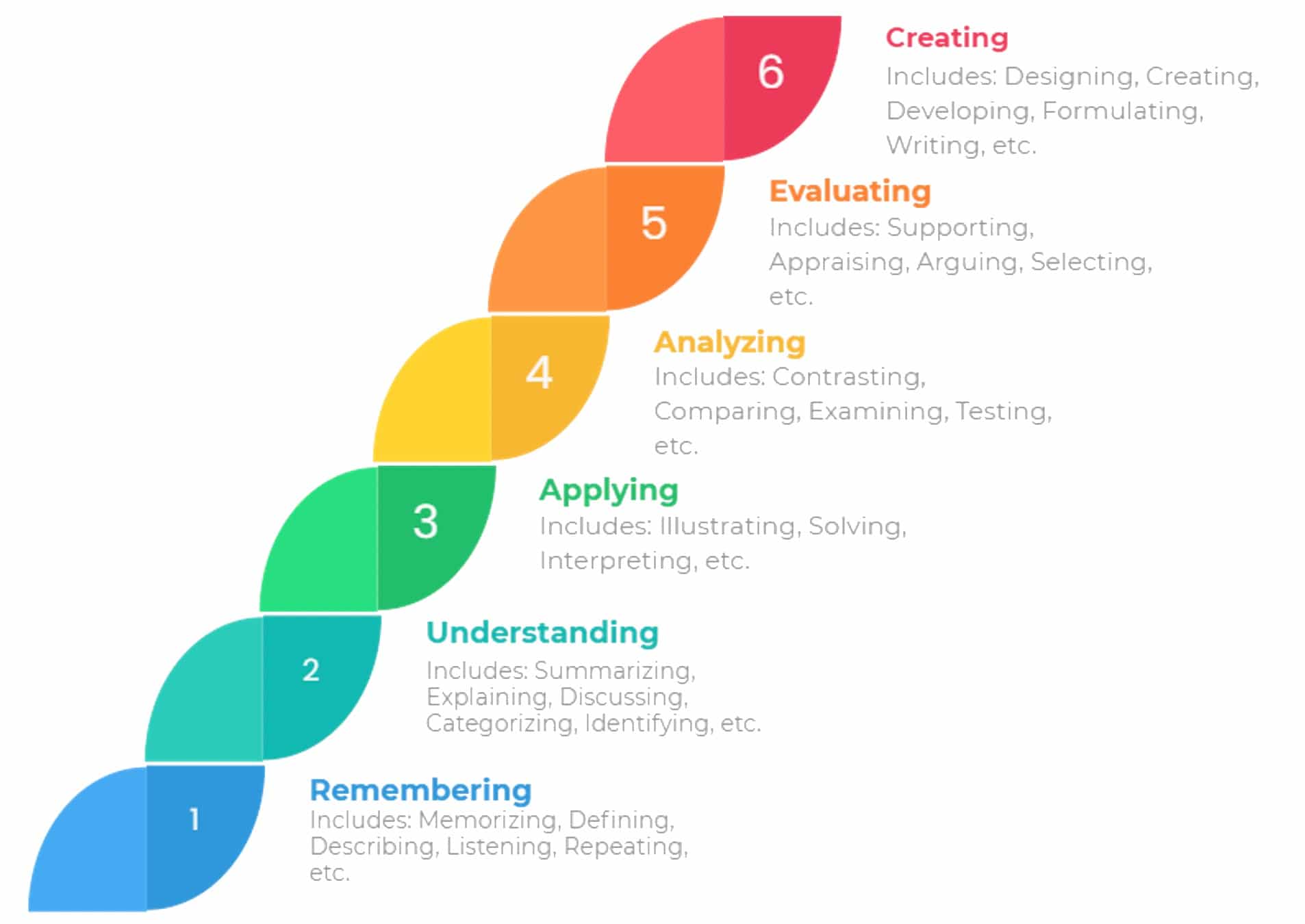
Blooms Taxonomy Printable - A taxonomy for learning, teaching, and assessing, abridged edition. Bloom's revised related verbs taxonomy: Understanding these verbs is crucial for effective teaching and learning.
Examine and break information into parts by identifying motives or causes. Make a diorama to illustrate an important event. Benjamin bloom and colleagues (1956) created the original taxonomy of the cognitive domain for categorizing level of abstraction of questions that commonly occur in educational settings. Can you provide an example of what you mean.?
Apply an abstract idea in a concrete situation to solve a problem or relate it to prior experience. What was the main idea.? Bloom’s taxonomy isn’t just a theoretical framework—it’s a practical tool that can make your aswb exam preparation more efficient and effective. Oose, demonstrate, dramatize, employ, illustrate, interpret, operat. By using a range of question types and focusing on the learning objective, teachers can create effective bloom’s questions that assess student learning and understanding. Make a scrapbook about the areas of study.
Blooms Taxonomy Educational Laminated Chart
At the heart of bloom’s taxonomy are 17 key verbs that help educators define and assess learning objectives. By using a range of question types and focusing on the learning objective, teachers can create effective.
Bloom’s Taxonomy HIGHLAND LITERACY
In this article, we will delve into the 17 bloom’s taxonomy verbs, exploring their meanings, applications, and importance in educational settings. Can you provide an example of what you mean.? Guide to the revised bloom’s.
Printable Bloom's Taxonomy
Judgments about make inferences and find evidence to support generalizations. Benjamin bloom created a taxonomy of measurable verbs to help us describe and classify observable knowledge, skills, attitudes, behaviors and abilities. Oose, demonstrate, dramatize, employ,.
Blooms Taxonomy Verbs Blooms Taxonomy Verbs Blooms Taxonomy Verbs
A taxonomy for learning, teaching, and assessing, abridged edition. Interpret or summarize ideas in own words. Use the chart to help formulate effective learning objectives for your educational events. Can you write a brief outline.?.
Blooms Taxonomy MR TODD'S CLASSROOM
The theory is based upon the idea that there are levels of observable actions that indicate something is happening in the brain (cognitive activity.) • the stages outlined in the table are designed to build.
Bloom’s Taxonomy Learning Objectives
By structuring your study efforts according to its six levels, you can ensure that you’re retaining key social work knowledge and mastering the skills needed to apply, analyze, and evaluate. Phics show the revised and.
Bloom's Taxonomy CPAHS Library
Oose, demonstrate, dramatize, employ, illustrate, interpret, operat. Remember previously learned information comprehension: Can you write a brief outline.? Apply an abstract idea in a concrete situation to solve a problem or relate it to prior.
What was the main idea.? Understanding these verbs is crucial for effective teaching and learning. Can you provide an example of what you mean.? Can you write in your own words.? The revised taxonomy has altered categories and now includes verbs associated with each of the six aspects of cognition.
Examine and break present and information into parts by identifying motives or causes. Use the chart to help formulate effective learning objectives for your educational events. • the stages outlined in the table are designed to build on each other as you continue to learn information. Make a diorama to illustrate an important event.
Bloom Found That Over 95 % Of The Test Questions Students Encounter Require Them To Think Only At The Lowest Possible Level.the Recall Of Information.
Evaluate , judge, recommend, assess, estimate, measure. Can you provide an example of what you mean.? In an effort to turn a high level taxonomy into meaningful classroom learning experiences a number of educators have translated each definition into a set of actionable bloom’s taxonomy verbs. Examine and break present and information into parts by identifying motives or causes.
Make A Scrapbook About The Areas Of Study.
Can you write in your own words.? Understand the main ideas of material heard, viewed, or read. Taxonomy to reflect relevance to 21st century work. By using a range of question types and focusing on the learning objective, teachers can create effective bloom’s questions that assess student learning and understanding.
A Taxonomy For Learning, Teaching, And Assessing, Abridged Edition.
Make a diorama to illustrate an important event. Benjamin bloom and colleagues (1956) created the original taxonomy of the cognitive domain for categorizing level of abstraction of questions that commonly occur in educational settings. Bloom’s taxonomy is a hierarchical model that outlines six categories of learning and application skills that progress from less to more complex. Can you write a brief outline.?
The Theory Is Based Upon The Idea That There Are Levels Of Observable Actions That Indicate Something Is Happening In The Brain (Cognitive Activity.)
Bloom’s taxonomy of measurable verbs cognitive level illustrative verbs knowledge: In this article, we will delve into the 17 bloom’s taxonomy verbs, exploring their meanings, applications, and importance in educational settings. Solve problems to new situations by applying acquired knowledge, facts, techniques and rules in a different way. Benjamin bloom created a taxonomy of measurable verbs to help us describe and classify observable knowledge, skills, attitudes, behaviors and abilities.
In an effort to turn a high level taxonomy into meaningful classroom learning experiences a number of educators have translated each definition into a set of actionable bloom’s taxonomy verbs. In this article, we will delve into the 17 bloom’s taxonomy verbs, exploring their meanings, applications, and importance in educational settings. Defend opinions anci anc4 lustitv a course of action about in formation. Bloom's taxonomy in 1956, benjamin bloom headed a group of educational psychologists who developed a classification of levels of intellectual behavior important in learning. Which is true or false.?